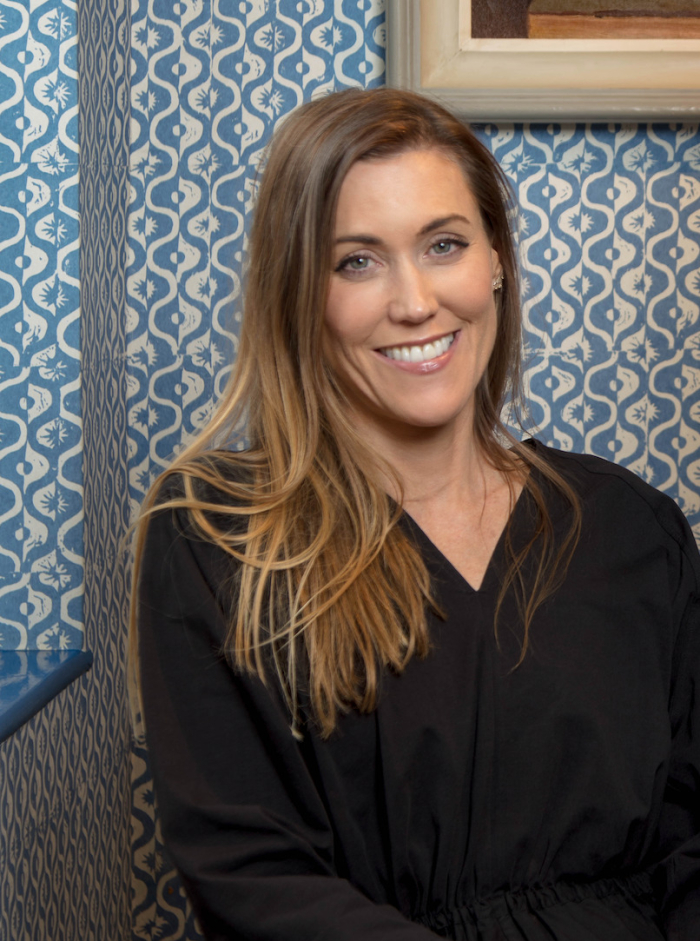
Meet the founder – Emma Hooton
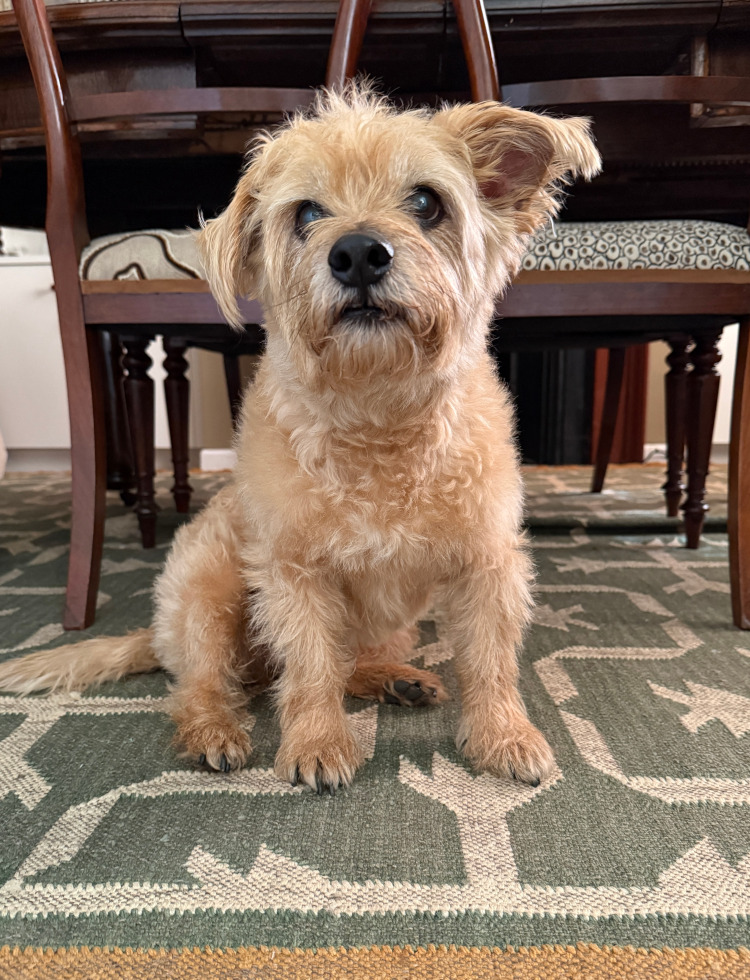
Freddie the Norfolk is currently demanding attention under the desk, which feels like as good a place as any to start.
I grew up in a house that was never quite finished, because we were always moving. My family started developing houses back in the early eighties, long before it was the thing everyone and their neighbour was doing — friends thought we were completely mad, moving every couple of years. But I didn’t know any different. I grew up on building sites, watching potential get pulled out of properties other people walked straight past. My father was the creative force behind it all — a genuine eye, the one who actually turned a house into a home. That’s where it started for me, though I wouldn’t have known it at the time.
I read Classics at Exeter, then took the scenic route around the world for a while before finally landing at KLC in Chelsea Harbour a few years later. One intense year that grounded me properly, not just in design but in how to actually run a design business — something that’s stayed with me ever since. From there I worked with Hugh Leslie in South Kensington, a young Kiwi designer with old-school pedigree through Chester Jones and Colefax and Fowler, doing original, high end work. Hugh introduced me to the niche fabric houses, the specialist antiques dealers, the artisan makers — the hidden, high-end craftsmanship world that exists if you know where to look.
Then Lehman Brothers collapsed and the industry went quiet. I felt lucky to have a place at Hugh’s. An opportunity came through a contractor friend, working on a house in Chelsea for a family I later found out were Malaysian royalty — he needed an interior designer, and I stepped in. That was my first project, and I went for it. I’ve always been independently minded, and careful, organised and sensible enough to back myself. Word of mouth did the rest, and within a couple of years I had clients across London and Hampshire.
I hired an admin assistant early on, then someone for CAD work — Rosie is still with me now, fifteen years later. Charlotte came on board too, newly out of KLC, there since the very concept of the studio. We’ve all just stayed together, and the business has grown with us rather than around us, which I don’t take for granted. It’s a positive, genuinely supportive culture, everyone bringing a different creative viewpoint, all of it coming together into something none of us could quite do alone. Since then we have traversed through Brexit, Covid and political turbulence. We’ve had to be adaptable through all of it, and I think that constant recalibrating has, strangely, made the studio better and more resilient than if things had just carried on smoothly the whole way through.
So what does that mean for the work now?
We’re always looking at what’s new, but ruthless about staying true to what we genuinely love — our fabric library only ever holds things we’re completely aligned with; anything we aren’t, goes. We wouldn’t call ourselves a single style, we’re genuinely adaptable, but there’s a definite thread: warm, layered, country-influenced schemes with an all-important ‘edge’, practicality built in for the young families who make up much of our client base, and originality that matters deeply to us. We’re proudly the antithesis of the generic, neutral, show-home look that’s everywhere now — schemes that work as well in a London townhouse as an historic country house, though the heritage properties are amongst our most treasured projects. You can explore our portfolio here.
Part of that comes from a distinction I care about between decorating and designing. There’s real skill in both, but decorating often starts with furniture and finishes after a room’s bones are already set. We’ve never worked that way — from the start, joinery, lighting and technical drawings have been part of the same thought process as choosing a fabric, rather than something bolted on afterwards. We don’t believe you can do one without the other, and that’s a principle the whole studio holds and has meant that we have maintained a deep skillset within the team to this day.
What we love most is the variation each client brings. We spend a huge amount of time listening — to the client, the property, its history and architecture — before anything else happens. Then the team sits down together, pulls together inspiration, and properly immerses itself in the project. Nothing about it is formulaic, and what comes out of that collective, synergistic energy exceeds my own expectations more often than not.
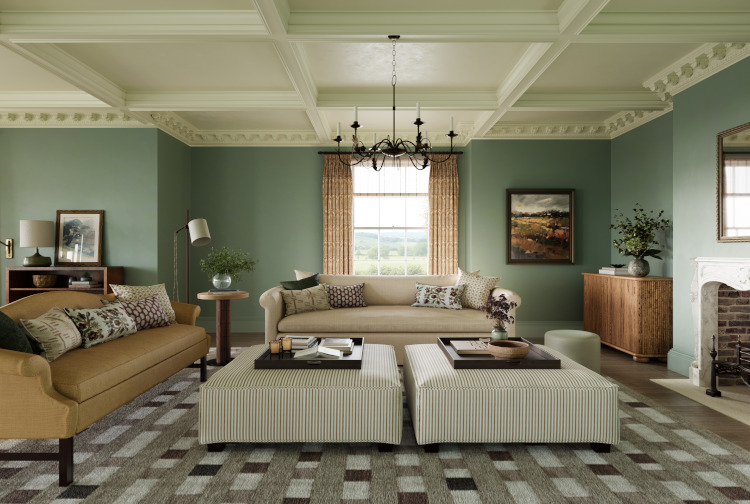
A lot of that comes from what continues to influence me. Architecture in the broadest sense — a stark contemporary box on a beach in the Hamptons, a chateau perched on the banks of the Dordogne, and everything in between — but if I’m honest, my heart sits with historic houses. Not refurbishing them, but properly restoring them, and learning along the way from the craftspeople who keep that world alive: experts restoring original panelling, plasterwork specialists creating moulding that very few are trained to do anymore. The only things that truly last, I think, are well-considered contemporary architecture or the buildings and crafts that have endured for centuries — and growing up around historic houses shaped how I see everything.
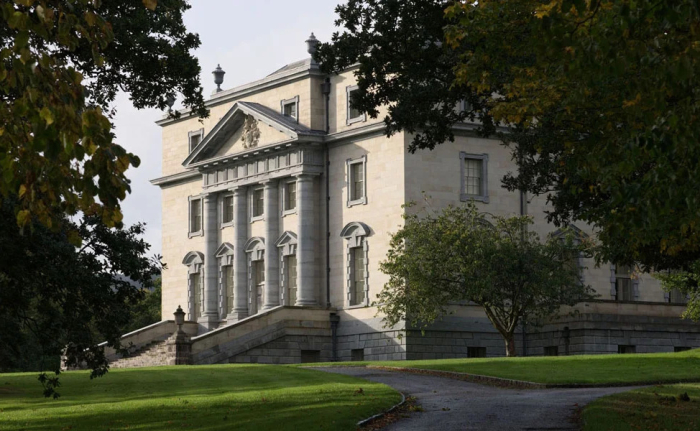
Sir John Soane is a big inspiration; we recently visited his old country house, and the simplicity of his classical detailing has stayed with me. Robert Kime too — textiles that don’t seem to age at all, which tells you everything about how a room is meant to last. And going back to where I started, Colefax and Fowler, and Chester Jones in particular, whose edge clearly rubbed off on Hugh and, through him, on me. Over the years I’ve been genuinely drawn to American influence, often overlooked next to the obvious European references — Sister Parish more or less invented the American country house look, and that confidence runs right through to fabric houses we love working with now, like Zak + Fox and Schumacher. High-end, self-assured and slightly unexpected.
The same goes for antiques, whether a client’s own family pieces or ones we source that have already lived several lives — there’s a presence in them that’s hard to manufacture, and it’s why they stay in families for generations. That continuity is really at the heart of what we’re doing.
And also at our very heart – there isn’t a person at Studio Hooton who hasn’t had their life enriched by a canine companion. Dogs Trust is one of our studio charities, and Freddie does the rounds to all our desks throughout the day.