The subtle power of detail
Refined design details rarely shout for attention. They show up on the softened edge of a tabletop, the quiet glide of a drawer, the curve that shifts the feel of a room without drawing attention. We spoke with Neil Stevenson, founder of NEJ Stevenson – the British firm renowned for its finely crafted, bespoke pieces for high-end interiors – about the artistry behind exceptional spaces.
The art of craft
How can bespoke cabinetry quietly transform a home?
The benefit of bespoke furniture is that it can be tailored to a specific need. It can be either a statement piece to dominate or a subtle addition to a room and integral part of the design or architectural style. Most importantly for me as a designer, a bespoke piece must add significantly to the feel and function of a room. Bespoke furniture should answer a need and part of the designer’s job is to interrogate the clients brief to determine actual need rather than perceived need so that the piece becomes a joy both aesthetically and functionally.
Which historical techniques continue to shape your work today?
Cabinetmaking is still fundamentally the same today requiring accuracy and understanding of materials. We are fortunate to have new materials that allow us to create furniture that can meet the design and environmental needs of modern clients. The historic methods of allowing solid timber to breathe are as current today as they were in medieval times albeit with the added problem of domestic climate control and underfloor heating. As we still make traditional pieces ranging from medieval to art deco pretty much all techniques are still in use although there is generally a lot less carving and moulding detail.
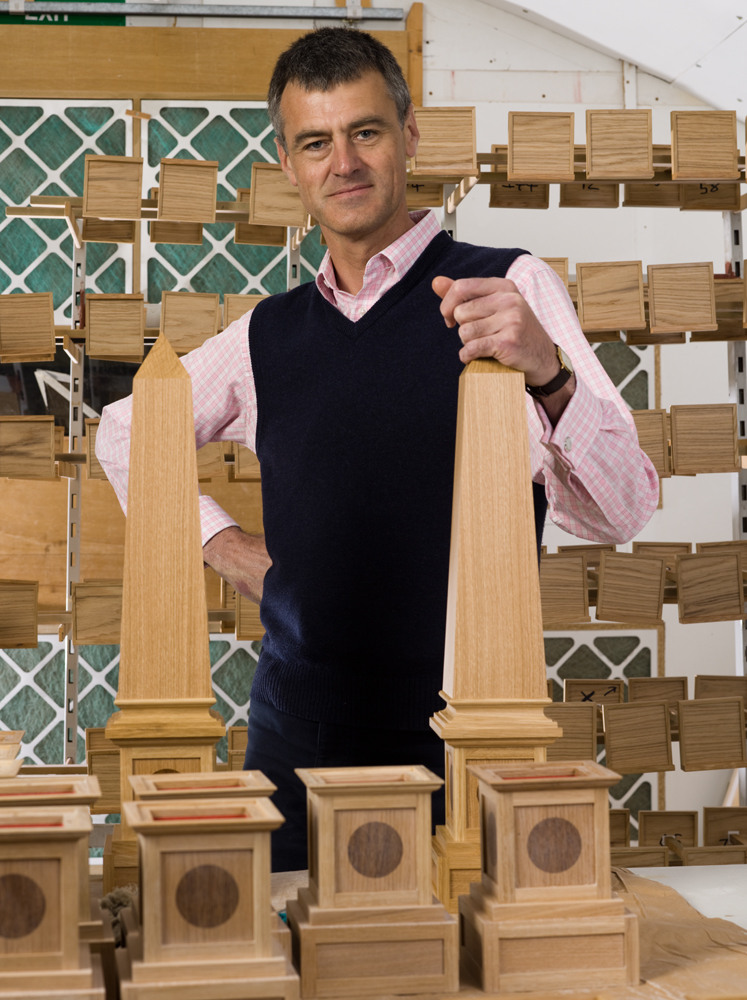
Neil Stevenson with obelisks designed for Pol Roger
What small details instantly reveal true craftwork to you?
For cabinetmakers the first thing you look for is a Georgian dovetail which is generally considered the definition of an excellent piece of work. The first thing you notice is always the material selection, which is more of an art than a science and defines the craftsman understanding and approach.
Shaping spaces
How can a furniture piece echo an interior’s design intent?
This comes down to the designer having a well-defined aesthetic for the space, understanding the form and function. A well-designed and executed piece defines the space.
What makes a silhouette feel timeless rather than tied to a trend?
For me one of the most important aspects of a piece is proportion. You can use the best materials and craftsmanship but if it is the wrong size and the elements within the structure are ill thought out then the piece will always look wrong.
Craft & philosophy
What does super prime mean to you in the context of cabinetry and joinery?
Excellence in design, material selection and execution. This very rarely means the most expensive or the most complex.
Material influences
How do your material choices affect the details you add to a piece?
All materials have specific characteristics which should be taken into account before being selected. However, quite often materials are specified in projects by designers based on appearance and this can cause problems. In respect of timber not all trees are the same, some are tall and straight being suitable for large doors and cabinetry and others are short and twisted which are more suitable for inlays, details and small pieces such as chairs and boxes.
Lasting style
How do you design pieces that age beautifully over time – visually and structurally
Structurally there should be no problem if they have been constructed using appropriate materials and methods. Visually it is more nuanced as clients don’t want colours to change so we use a lot of lightfast stains and lacquers with UV filters. Personally I prefer the wood to age naturally so favour natural finishes that allow the wood to develop and mature.
Memorable projects
You’ve worked on projects from royal palaces to prime residential commissions. What has been your most memorable work?
The projects I like the most are the ones that have longevity and those tend to be the historic work of which there are two that stick out. The State Dining Room sideboard at Windsor Castle, destroyed in the fire, which we replicated exactly from the materials, construction and fittings. The other is the art deco furniture at Eltham Palace, particularly the dining room furniture in walnut, bird’s eye maple, silver gilt and salmon pink leather.
In a world of fast design, Stevenson’s work reminds us that real value comes from the slow, deliberate details only a maker can achieve.
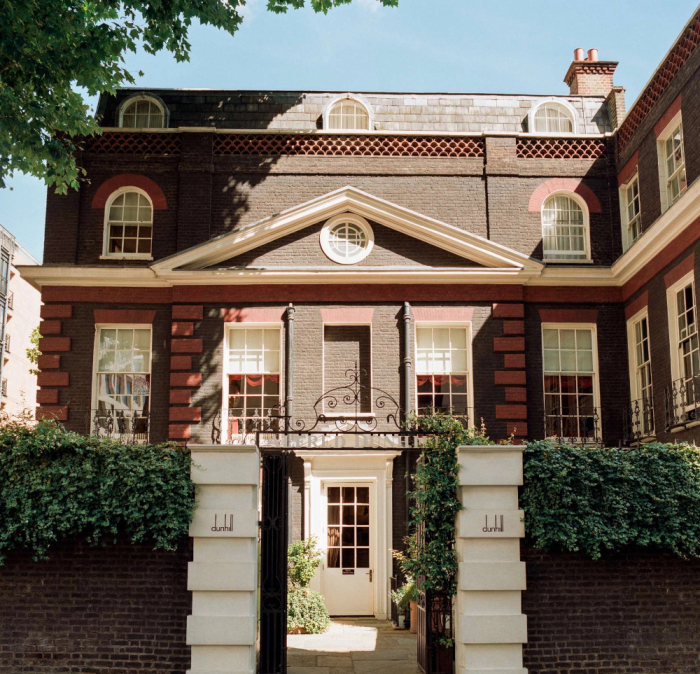
Image credits: NEJ Stevenson / Bourdon House for Alfred Dunhill